LABBS at Llandudno

Venue Cymru, LlandudnoVenue Cymru, LlandudnoThis weekend saw the 2010 LABBS Convention in Llandudno. The chorus contest was exceedingly closely-fought, with only 13 points in total (out of a possible 1800) separating first and third places. The quartet contest was clearer-cut for the outright winner (last year’s bronze medallists, Miss-Demeanour), but it was hard to predict who was going to pick up the bronze medal.

(On a personal note, I was pleased to see the three competing choruses I had coached during September come away with prizes. Amersham A Cappella landed gold medals, Green Street Blues picked up bronze, and Bristol Fashion received the Peter Caller award to celebrate their scores moving from ‘division 2’ level up into ‘division 1’.)

Questions of Blend

A recent comment on a post from last year asked the following question:

I have tried twice without success to join choirs that do 3 and 4 part harmony. I get rejected after a few sessions as i am told my voice does not blend. I know I have a good singing voice and i am very motivated, although I do not understand very much about music theory

The last attempt did not lead to any criticism from the coach but from the other singers near me. I am puzzled as to the possible cause of non blending. Any advice?

I felt it was one of those questions that deserves a post (or possibly a book) in its own right.

Saturday with Vale Connection

Vale Connection ChorusVale Connection ChorusI spent last Saturday working with Vale Connection chorus in Evesham on my arrangement of ‘Girls Just Want to Have Fun’. Some of the singers had attended the education day back in 2009 that it was originally arranged for, but for others it was new territory. It’s one of those songs where the title sets the tone for the performance style, and it’s almost impossible to avoid having a good time with it (not that I’ve really attempted to).

Two things stood out for me from the day’s activities.

Was Beethoven any Good at Choral Music?

Just doesn't look like a singer, does he?Just doesn't look like a singer, does he?I had an email earlier this week from an erstwhile student who is now doing a masters degree in musicology. He’s contemplating doing a study on (I quote) ‘the poor quality of Beethoven’s choral writing’ as something that seems under-discussed in the literature. He was asking for recommendations on literature that would articulate a consensus of what constitutes good choral writing against which to measure Beethoven’s work. My first instinct was to reply grumpily that I wasn’t going to do his bibliographical work for him, since the identification and evaluation of sources is a pretty major part of a musicology student’s job description. I was always mean like that when I was teaching musicology, and old habits die hard (but I’d probably also suggest having a furtle around on Choralnet.)

My second instinct, though, was to question his premise. (And if he’s still like I remember him, I think he’ll enjoy this more than a list of books.)

Melody and Communication

LABBS members who attended the education day in Bristol earlier this year will have already heard Heather Lane’s interesting ideas on the relationship between a melody’s shape and its meaning. I wasn’t there, but had the pleasure of hearing her present them at Category School in September, at which she showed herself to be emerging as a distinctively creative thinker.

Her basic thesis is that a song’s melodic contour often correlates with the way the song’s lyric directs its message. So, a lower tessitura often betokens a more inward, personal statement, while when the melody heads higher, the song is often reaching out to communicate to another.

Soapbox: Learning Tracks

soapboxI know the arguments in favour of giving people recordings of the music they need to learn to sing their part in a choral group. It’s a very common practice in the barbershop world, and an increasingly common one in classical choirs. And it’s true that it enables people who don’t read music to participate with very little effort, and indeed to perform much more complex music than they would be able to without it.

And, yes, having people participate in singing is a Good Thing. No argument there.

But still, I do think that every so often someone needs to point out the problems that learning tracks create as well as their opportunities.

On Musical Intelligence

Howard Gardner’s theory of multiple intelligences has been attractive to educators, especially those in the arts and humanities who had the most reason to critique a narrow, logical-analytical definition of intelligence. If you’ve spent any time with human beings involved in the act of learning, you know that different people process ideas and develop skills in different ways and find different things come easily or resist learning.

As a musician I would on the face of it be expected to be most interested in his category of musical intelligence. But interestingly, this is actually the least useful category for a music educator.

On the Interpretation of Gesture

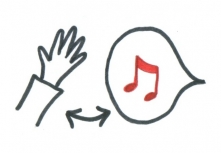
gesture_voice.JPG
I recently had the pleasure of reading a very interesting dissertation about gender and choral conducting by Michelle Sampson, a recent graduate from Roehampton University. I’m not going to comment just yet on her primary findings since there are plans afoot to publish the study and I don’t want to steal her thunder, but she has given me permission to write about a specific observation that I found particularly fascinating.

Part of the research process involved asking both singers and conductors to comment on video footage of conductors in action (in rehearsal and/or performance). This is what Michelle noted about this process:

...found this helpful?

I provide this content free of charge, because I like to be helpful. If you have found it useful, you may wish to make a donation to the causes I support to say thank you.


Archive by date

Syndicate content