
Add a comment
Many Hearts Beating as One
‹-- PreviousNext --› I’ve just spent a happy weekend working with Heartbeat chorus at their retreat in rural Derbyshire. The chorus booked en masse into a small college about 40 minutes’ drive from their usual rehearsal venue to spend a full two days away from the distractions of everyday life focusing on their repertoire for the Sweet Adelines Region 31 Convention in May.
It was a wonderful luxury to have that much time available. It meant we could focus in on details and get them sorted out without feeling we were short-changing the rest of the song. We spent a lot of time exploring the arrangements by duetting, and as ever, the opportunity to hear and understand how the other parts interact with each other brought clarity and colour to the performance, as the singers intuitively let the detail of the arrangements through. Indeed, I felt that I came home a better arranger after having lived with the inner details of the work of David Wright and Ed Waesche for a weekend.
At the same time, the big challenge for an event like this is pacing ourselves. Intensive rehearsal is tiring, and there’s the risk of getting frustrated on the second day as the brains start to drop details they’d absorbed on the first. One way we dealt with this was to make sure we left sections of the songs untouched on Saturday to come back to, so that Sunday had a sense of covering new ground, not just trying to recreate the previous days’ achievements. We also played some silly games with the repertoire – activities that gave the opportunity to live with and embed the progress without either the psychological or physical pressure to ‘get it all right’.
A useful exercise towards the end of day 2 was to sing through a song in sections, taking each one two or three times to give the singers to spot things they’d missed and re-insert them. This meant there was far more singing than talking going on, but it was still active learning, rather than just singing on autopilot. And it proved quite satisfying for people to have the chance to fix things for themselves – people like getting things right, and taking the music in short enough sections that they had the chance to spot things they could improve and deal with them before they forgot again meant everyone could feel like they were on the case.
I had an interesting light-bulb moment during the discussion time on Sunday afternoon. A singer asked if I thought they were over-singing the tags. I had to think for a moment, as I hadn’t actually heard them that often – I was making a point during the coaching process to stop before the big finishes in the interests of both vocal and emotional stamina. But that meant that, on the few occasions when we did go right to the end, they were really up for it, and did a glorious job. This made me realise that the phenomenon of over-singing tags (as in forcing the sound) could actually be a result of over-singing tags (as in singing them too much).
At a personal level, it was a treat to hear to the chorus sing Moondance, which I arranged for them about a year ago. They sing it with a real sense of ownership – like the arrangement was made for them. Which of course it was – but it’s interesting that the literal fact of having a bespoke chart should translate into that sense of artistic aplomb.


You may also like ...
|
Node 891
Weight = 8. Linked from Love & Rhythm (4), Common link to www.heartbeatchorus.co.uk/ (2), Two tags in common [196 posts have this] A Cappella, Coaching (2) 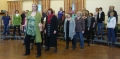
|
Node 781
Weight = 5. Linked from Perception, Imagination and Technique (4), One tag in common [425 posts have this] Coaching (1) 
|
Node 679
Weight = 5. Linked from How can I retain what I’ve learned? (4), One tag in common [425 posts have this] Coaching (1)
|
Node 950
Weight = 4. Common link to www.heartbeatchorus.co.uk/ (2), Two tags in common [196 posts have this] A Cappella, Coaching (2) 
|
